
 Mr Regatta
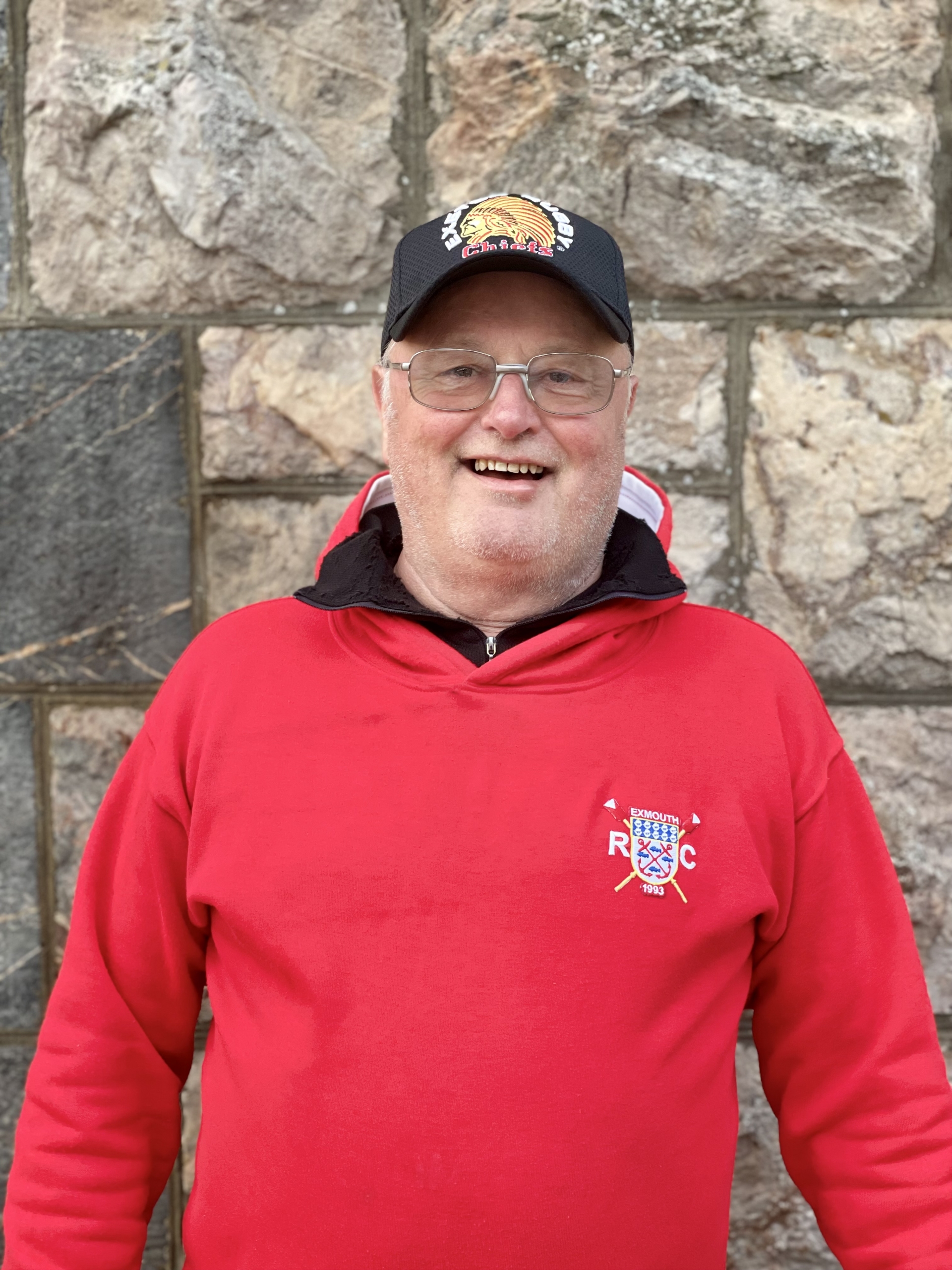
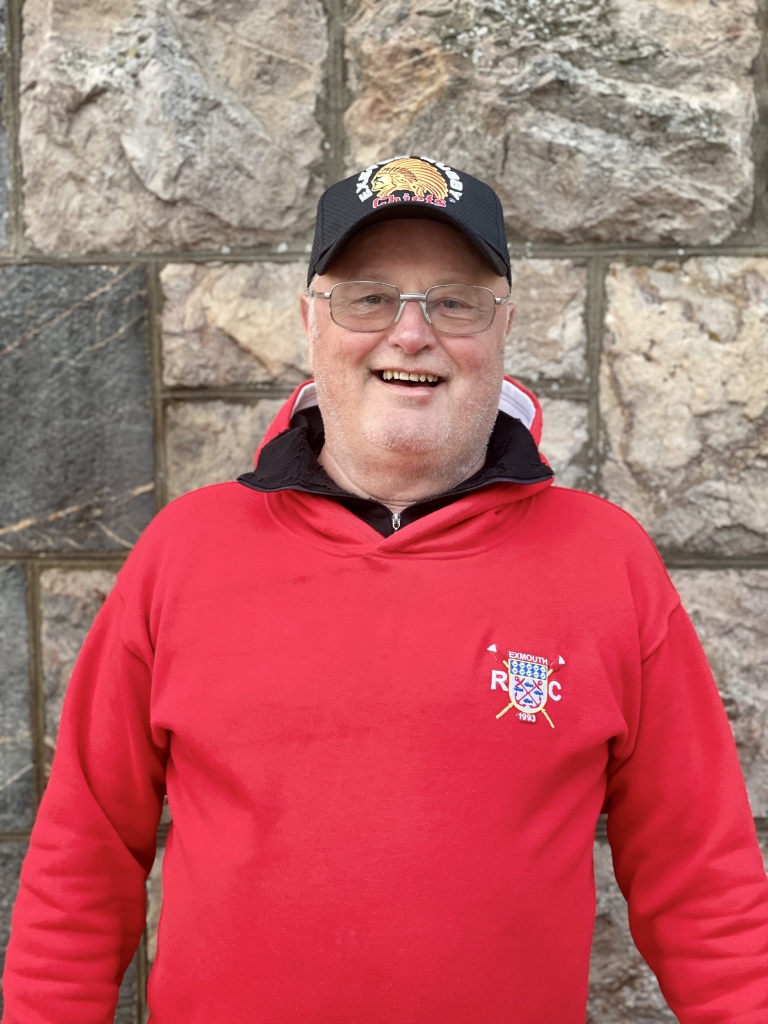
A very long time ago, back in the day, a 18 year-old Les Norcliffe joined the Royal Marines. After surviving the Mud Run, thirty mile yomps across Dartmoor, and Saturday nights in The Old Ship or the Volunteer, he won his green beret and settled for a service career as an Assault Engineer. The role called for fixing duff equipment, finding a way around immoveable objects, and giving life a hefty kick when everything else had failed.
Many decades later, he’s aware just how perfectly CTC and the Corps have prepared him for the demands of Exmouth Rowing Club. ‘The Marines teach you that nothing is impossible’, he says. ‘When the whole regatta thing threatens to get out of hand, you’ve no idea how tidy that can be.’
The whole regatta thing. For any club taking to the water, competition in some shape or form becomes the lifeblood pumping to every corner of the boat compound. It’s either you versus that evil easterly wind, or you in the teeth of a pitiless ebb tide, or you versus that second bottle of wine you should have left unopened last night, or – at the respectable end of the rowing spectrum – you and your mates against whoever turns up to try and beat you. The latter, of course, we call regattas. And if you think they happen by accident, think again.
The ERC regatta was an egg that hatched slowly. Back in 2008, after a series of deeply satisfying excursions to the Guernsey regatta, one of those chance conversations that pepper the history of this mighty club ended up with a why-not moment. Why not stage our own regatta? Why not tempt other clubs, other crews across to Exmouth? Why not launch them on our fabled water and give them a thorough seeing-to?
And so, for year after year, it happened. First Mayflower, ancient contenders from Plymouth, then a trickle of other crews until clubs across the south-west got together and formed a Coastal League. The new competition put a smile on the face of coastal rowing, not least in Exmouth who powered to overall victory in the first full season of races and have acquinted themselves with distinction ever since. Then came a dry cough and sneeze or two and competitive rowing took a back seat to Covid.
Now, though, the virus has become a footnote in most newspapers and Les, Mr Regatta, is back in business. First challenge in the 2022 was the allocation of dates: with six participating clubs from Plymouth, Torquay, Teignmouth, Carrick, Jurassica, and ERC, where and when were these events to take place?
‘Everything depends on the tides,’ says Les. ‘And this year has been a buggar tides-wise. We were orginally slotted for Saturday 26th March but ceded that date to Teignmouth. They were weathered-off in the end so that gave us Saturday 21st May. The parcel of useable tides is much smaller than you’d think, so the next available date should we have to cancel will be towards the end of June. Are we at the mercy of the Weather Gods? Of course we are.’
And not just the Weather Gods. Since the formation of the Coastal League, putting various classes of boat and categories of rower on the water has become infinitely more complex than the belt-and-braces days of yore. And so Les must now make provision for no less than 24 combinations of men, women, quads, doubles, singles, plus the happy news that seventy years of age is no bar to getting out there and performing.
‘This thing becomes a challenge. We used to have a Masters category. That was pretty straightforward. You were old, older than fifty, but still bold. But now it’s a little trickier because we have a fifty plus category, and then a sixty plus category, which doubles the challenge of getting these boats out onto the start line in some kind of order. The customer is still king, of course, which means we have to find an answer but it’s in my nature to keep asking the simplest questions. Could we make this thing easier? More logical? Should we maybe draw up a menu of races and ask for entries that fit the bill rather than design the day around individual wants and needs? The answer, I suspect, is yes.’
And the challenge of Regattadom doesn’t end there. Les has established two courses: a 6K running out past the Fairway Buoy and back, and a shorter 4K in the buoyed channel. Exmouth water has become a magnet for anyone with the bright pulse of competition in their veins and so, on Saturday, Les will be sharing his day with Exmouth Sailing Club, who are running a dinghy race out beyond the Fairway Buoy, and with Edge Watersports, who are minded to lay on a promotional event, primarily for foil kitesurfers.
‘The key is getting everyone on board’, he says. ‘Take Liam from Edge. He’s a lovely guy, really helpful, and now we know what each of us are up to we’ll be in touch throughout the day. I’ll tell him when I’m launching fifteen boats and he’ll make sure his guys know about it. As for the Sailing Club, they’ll be sending their dinghies out to sea via the Western Channel, well clear of us, though they’ll have to use the buoyed channel on their return. Solution? I’ll build in a little window in mid-afternoon through which they can pop all those sails as they come back in. If you can plan confliction out, so much the better. Win-win is always the sweetest option.’
The current Les masterplan calls for five launches on Regatta Day. He’s expecting two extra crews as well as the Coastal Leaguers, one from Hayling Island, the other from Bideford. This should guarantee a busy day’s racing, spiced by the challenge of forming up on the start with a biggish ebb tide constantly pushing coxes over the line, and Les is more aware than ever that his prime responsibility is keeping both crews and boats intact.
‘My number one concern has always been safety,’ he says. ‘I’m there to get these crews out on the water, to get them racing, and then to get them home safe. To do that I need a minimum of three safety boats. Thanks to the likes of Toby Lagus, and Tom Hurley, and Charlie Angell and Rob Mew, that’s always been possible, but without these guys there’d be no regatta. No safety boat cover, and the thing can’t happen. Simple as.’
Regattas, of course, have always been adorned with tables groaning under oodles of cakes, tarts, burgers, and assorted yummies, together with drinks of every description. More mundane challenges like parking also have to be sorted, and in the early days much of these responsibilities fell into Les’ lap. No longer.
‘We’re blessed in this club because it’s grown and grown and as well as some decent athletes we have cake-makers of genius on board. Everyone mucks in. Everyone lends a hand. The Bake-Off Trophy was a genius idea because it gives scoffing a bit of an edge, but without people prepared to step up and do their bit the event would die of hunger and thirst. We’re blessed in every respect, we truly are.’
Success is often the author of its own downfall. Events get ever-bigger until proper control becomes impossible and Les is all too conscious of what might follow. To head off this moment, he’s built a core team he knows he can trust.
‘Keith Murrin as Beachmaster. Pete Bradshaw and Bob Board on the start line. Ray Mallet as timekeeper. And little me as the Fat Controller. For the first time since Covid, we’ll be doing a proper indoors briefing with power point and an intro from Joey, the Club Captain. I’ll explain the safety cover, and the course details and the start procedures and what to do if anything goes horribly wrong. After that, it’s me, and the team, and the trainset, and all those hairy rowers lusting for glory. Do I ever worry about it? Of course I do, but if I didn’t then I know it wouldn’t be working properly.’
And so eight clubs, and countless combinations of rowers, blades, hopes, and a little mild apprehension will gather at Exmouth to celebrate the blessings of competition in a forecast westerly breeze of 10-12 mph. In the meantime, just days away from the big event, cakes are warming in ovens across the town and cabinet freezers are filling with Brew Dog and chilled Guinness. And Les? Mr Regatta?
‘You want the truth? Well, here it is. The moment that last boat is off the water, I’ll start to relax. Everyone’s intact. We have no serious injuries. No one’s died. And from that point on I don’t really care. All that matters is that everyone’s had a great day out on the water, and everyone’s safe home. Job done.’